 Get an appointment within days, not weeks or months


Living with chronic pain changes everything—how you move through your day, whether you can enjoy hiking Camelback Mountain, even how well you sleep at night. If you’re a Scottsdale resident who has tried cortisone shots, physical therapy, and pain medications without lasting relief, you’re not alone. According to the CDC, approximately 20.9% of U.S. adults experience chronic pain, and many feel trapped between medications that mask symptoms and surgeries that carry significant risks.
Regenerative medicine offers a fundamentally different approach: rather than temporarily blocking pain signals, treatments like amniotic stem cell therapy work to repair damaged tissue and reduce inflammation at the source. At Arizona Pain and Spine Institute, Dr. Asim Khan and Dr. Daniel Ryklin specialize in these innovative, non-surgical treatments for patients throughout Scottsdale, Phoenix, and the East Valley. This article explains how regenerative medicine works, who benefits most, and what to expect when you choose healing over symptom management.
Understanding Chronic Pain and Why Conventional Treatments Often Fall Short
Chronic pain is defined as pain lasting longer than three months—but anyone who lives with it knows the definition barely captures the reality. Whether you’re dealing with persistent back pain, degenerating joints, or nerve damage from an old injury, chronic pain becomes a constant companion that affects work, relationships, and mental health.
For Scottsdale and Phoenix-area residents, certain lifestyle factors can accelerate joint and tissue damage. Long commutes on the 101 and 202 freeways put extended pressure on the lumbar spine. The desert heat can lead to dehydration that affects joint lubrication. Weekend warriors who golf at Troon or hike the McDowell Sonoran Preserve may push through pain until minor injuries become chronic conditions.
The conventional treatment ladder typically begins with NSAIDs and physical therapy, escalates to cortisone injections for temporary relief, and eventually points toward surgery when nothing else works. But here’s what many patients aren’t told: research published in The Lancet has shown that cortisone injections may actually accelerate cartilage breakdown over time. Surgery, while sometimes necessary, carries risks of infection, long recovery periods, and no guarantee of pain relief.
Get Back Your Normal Life Again
As pain specialists, we can guarantee that we are more than qualified in alleviating your pain and treating your condition.
This is precisely where regenerative medicine changes the conversation. Instead of masking symptoms or removing damaged tissue, regenerative treatments aim to activate the body’s own healing mechanisms.
How Arizona Pain and Spine Institute Uses Regenerative Medicine for Chronic Pain
Dr. Khan and Dr. Ryklin have built Arizona Pain and Spine Institute’s reputation on one core philosophy: treat pain at its source rather than masking symptoms with medication. Since co-founding the practice in 2016, they’ve helped thousands of patients—many traveling from across Arizona and neighboring states—find relief through regenerative medicine when other treatments failed.
Amniotic Stem Cell Therapy: The Flagship Treatment
Amniotic stem cell therapy represents the cutting edge of regenerative medicine. These treatments use growth factors, cytokines, and healing compounds derived from donated amniotic tissue to promote tissue repair and reduce inflammation. Unlike cortisone, which provides temporary relief by suppressing the inflammatory response, amniotic stem cell injections work to actually regenerate damaged cartilage, tendons, and other soft tissues.
Dr. Khan explains that amniotic stem cells contain hyaluronic acid, collagen, and proteins that support the body’s natural healing cascade. When injected precisely into damaged joints or tissues using imaging guidance, these compounds can help restore function that many patients assumed was permanently lost.
PRP (Platelet-Rich Plasma) Therapy
For some conditions, platelet-rich plasma therapy offers another regenerative pathway. PRP uses concentrated platelets from your own blood to accelerate healing in damaged tissues. Dr. Ryklin often recommends PRP for knee pain, tendon injuries, and early-stage arthritis where the body’s healing response simply needs amplification rather than replacement.
Conditions That Respond to Regenerative Medicine
At Arizona Pain and Spine Institute, regenerative treatments are customized for a range of chronic pain conditions:
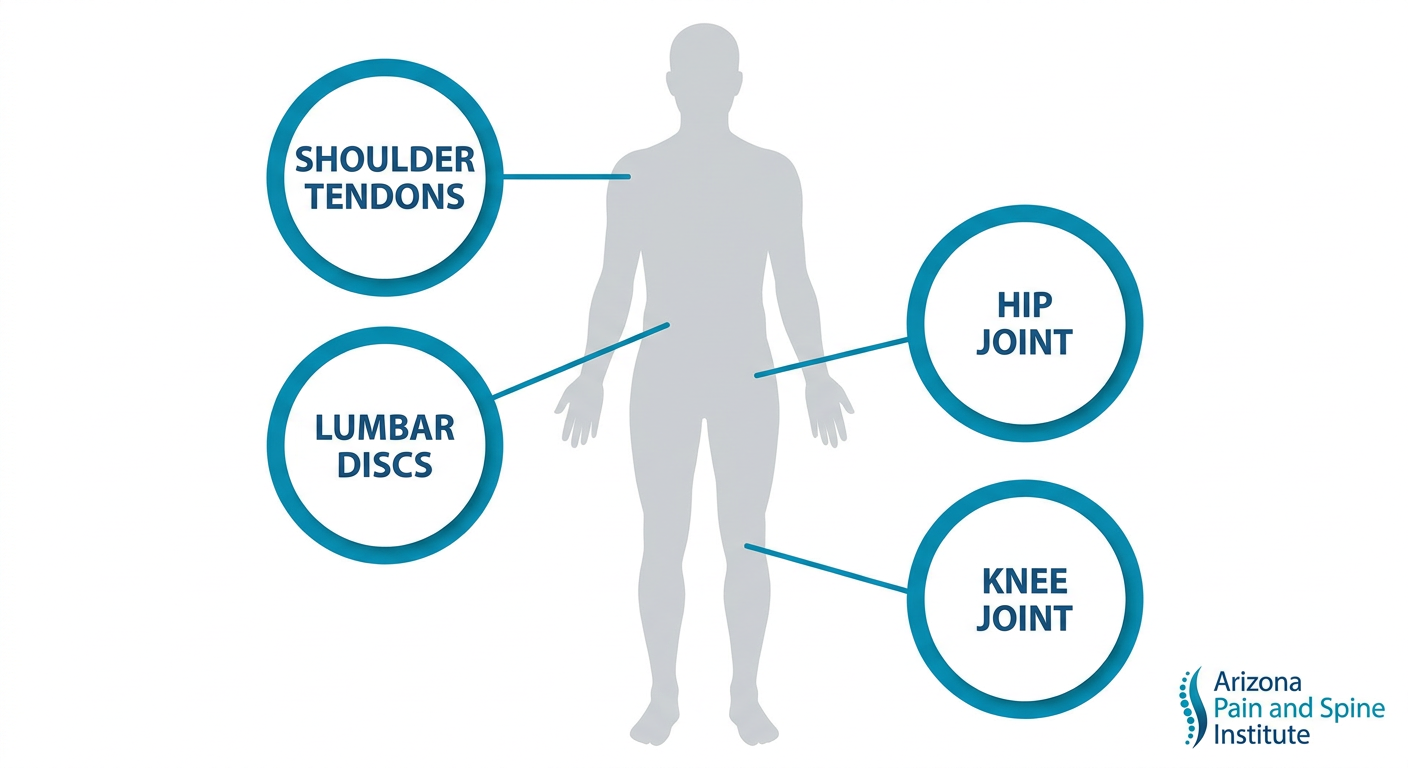
- Knee osteoarthritis – stem cell therapy can promote cartilage regeneration in joints that would otherwise progress toward replacement surgery
- Hip joint degeneration – amniotic injections may delay or eliminate the need for hip replacement
- Rotator cuff and shoulder injuries – regenerative treatments support tendon healing without surgical repair
- Chronic lower back pain – disc degeneration and facet joint arthritis often respond to targeted regenerative injections
- Sports injuries – ligament sprains, muscle tears, and overuse injuries heal faster with growth factor support
The non-surgical, minimally invasive philosophy extends throughout the practice. Dr. Khan and Dr. Ryklin’s goal is to get patients off medications when possible and provide natural solutions that restore function rather than simply managing symptoms.
Don’t let pain control your life. Schedule a consultation with Dr. Khan or Dr. Ryklin at Arizona Pain and Spine Institute to learn whether regenerative medicine is right for your condition. Call (480) 986-7246 or book online. Locations in Mesa, Gilbert, and Queen Creek—convenient to Scottsdale and the greater Phoenix metro area.
What to Expect as a Patient at Arizona Pain and Spine Institute
The journey toward healing begins with a comprehensive consultation. Dr. Khan and Dr. Ryklin take time to understand not just your pain, but your history, your lifestyle, and your goals. A weekend golfer hoping to return to the course has different needs than an office worker who simply wants to sit through meetings without constant lower back pain.
The Consultation Process
During your first visit, expect a thorough evaluation that may include reviewing imaging studies, assessing range of motion, and discussing previous treatments. Dr. Ryklin emphasizes that regenerative medicine isn’t appropriate for every patient—some conditions respond better to other interventional procedures like radio frequency ablation or nerve blocks. The goal is matching you with the treatment that offers the best chance of meaningful improvement.
The Procedure Itself
Regenerative injections are performed in-office using fluoroscopic or ultrasound guidance for precise placement. The procedures typically take 30-60 minutes. Most patients experience minimal discomfort during the injection and can return to daily activities the same day, though strenuous exercise is usually restricted for a period.
Results Timeline
Unlike cortisone shots that may provide immediate but temporary relief, regenerative treatments require time for the healing cascade to work. Patients typically begin noticing improvement within 2-6 weeks, with continued progress over several months as tissue regeneration occurs. Dr. Khan monitors your progress and adjusts the treatment plan based on your response.
Insurance and FastTrack Access
Arizona Pain and Spine Institute works with most insurance plans. For patients who need treatment immediately without waiting for insurance approval, the FastTrack cash-pay program offers same-day appointments and direct access to care. Many Scottsdale patients appreciate bypassing administrative delays when they’re ready to begin healing.
Is Regenerative Medicine Covered by Insurance in Arizona?
Insurance coverage for regenerative medicine varies by plan and specific treatment. While some insurers now cover PRP therapy for certain conditions, amniotic stem cell therapy is often considered elective and may not be covered. Arizona Pain and Spine Institute’s staff can verify your benefits before treatment. For patients without coverage, the FastTrack program provides transparent pricing and same-day scheduling.
How Long Does It Take to See Results from Stem Cell Therapy?
Most patients begin experiencing improvement within 2-6 weeks after amniotic stem cell injections, with continued progress over 3-6 months as tissue regeneration occurs. Dr. Khan explains that regenerative medicine works with your body’s natural healing timeline, unlike cortisone which provides immediate but temporary symptom relief. Individual results vary based on condition severity and overall health.
Can Regenerative Medicine Help Me Avoid Joint Replacement Surgery?
For many patients with early to moderate joint degeneration, regenerative treatments may significantly delay or eliminate the need for replacement surgery. Hip and knee arthritis patients in particular have experienced meaningful cartilage regeneration and pain reduction. Dr. Ryklin evaluates each case individually to determine whether regenerative medicine offers a realistic alternative to surgery based on imaging findings and clinical assessment.
Conclusion: A Different Path Forward for Chronic Pain
Chronic pain doesn’t have to mean a lifetime of medications or an eventual surgery. Regenerative medicine offers Scottsdale and Phoenix-area patients a third path—one focused on actual tissue healing rather than symptom suppression. Dr. Khan and Dr. Ryklin at Arizona Pain and Spine Institute have dedicated their practice to these innovative, non-surgical solutions because they’ve seen them transform lives.
Whether you’re dealing with joint degeneration, sports injuries, or persistent back pain that hasn’t responded to conventional treatments, regenerative medicine may offer the relief you’ve been searching for. Call (480) 986-7246 or schedule online to discuss your options with a board-certified pain specialist. Locations in Mesa, Gilbert, and Queen Creek serve patients throughout Scottsdale and the East Valley.
Frequently Asked Questions
What is regenerative medicine and how does it work for chronic pain?
Regenerative medicine uses biological compounds—like growth factors from amniotic tissue or concentrated platelets from your own blood—to stimulate your body’s natural healing processes. Rather than masking pain, these treatments promote actual tissue repair and reduce inflammation. Dr. Khan and Dr. Ryklin use imaging-guided injections to deliver regenerative compounds directly to damaged joints, tendons, or discs.
Is stem cell therapy available near Scottsdale, Arizona?
Yes. Arizona Pain and Spine Institute offers amniotic stem cell therapy at locations in Mesa, Gilbert, and Queen Creek—all convenient to Scottsdale via the 101 and 202 freeways. Dr. Khan and Dr. Ryklin have treated patients from throughout the Phoenix metro area seeking alternatives to surgery for joint pain, arthritis, and sports injuries.
Does regenerative medicine hurt?
Most patients experience minimal discomfort during regenerative injections. Dr. Ryklin uses local anesthesia and imaging guidance for precise, comfortable placement. Mild soreness at the injection site is common for a few days afterward. Many patients return to normal daily activities the same day, though strenuous exercise is typically restricted temporarily.
How does Arizona Pain and Spine Institute’s approach differ from other pain clinics?
Dr. Khan and Dr. Ryklin focus on treating pain at its source rather than masking symptoms with long-term medications. As pioneers in amniotic stem cell therapy in Arizona, they emphasize non-surgical, minimally invasive treatments designed to promote healing and reduce medication dependence. The practice’s FastTrack program also offers same-day appointments for patients who prefer cash-pay access.
Who is a good candidate for regenerative medicine treatment?
Patients with joint degeneration, chronic tendon injuries, early to moderate arthritis, or sports injuries often respond well to regenerative treatments. Those who have tried cortisone injections or physical therapy without lasting relief may benefit most. During your consultation, Dr. Khan evaluates your imaging, medical history, and treatment goals to determine if regenerative medicine is appropriate for your specific condition.
The statements on this blog are not intended to diagnose, treat, cure, or prevent any disease. The information provided reflects published medical research and Arizona Pain and Spine Institute’s clinical expertise. Individual results vary based on condition, severity, and treatment response. Always consult Dr. Khan, Dr. Ryklin, or your personal physician for specific medical advice. For appointments, call (480) 986-7246 or visit gotpainarizona.com.