 Get an appointment within days, not weeks or months


The landmark FLEXX Trial, a double-blind randomized study of 588 patients with knee osteoarthritis, demonstrated that Euflexxa produced a median pain reduction of 53% from baseline at 26 weeks—compared to 38% for saline control. For the 32.5 million Americans living with osteoarthritis, these clinical outcomes represent a meaningful non-surgical treatment option. This article examines the documented success rates of Euflexxa injections, explains how the treatment works, and details what patients at Arizona Pain and Spine Institute can expect from this FDA-approved viscosupplementation therapy.
What Is Euflexxa and How Does It Work?

Euflexxa is an FDA-approved injectable treatment containing 1% sodium hyaluronate, a highly purified form of hyaluronic acid. Manufactured by Ferring Pharmaceuticals, the product is specifically indicated for the treatment of pain in osteoarthritis of the knee in patients who have not responded adequately to conservative non-pharmacologic therapy and simple analgesics such as acetaminophen.
The Science Behind Viscosupplementation
Hyaluronic acid occurs naturally in healthy joint fluid, where it provides lubrication and shock absorption. In patients with knee osteoarthritis, the natural hyaluronic acid breaks down and loses its protective properties. A 2021 comprehensive review published in Orthopedic Reviews explains that hyaluronic acid injections improve symptoms by acting as both a lubricant and shock absorber, with benefits that extend beyond the duration of the product in the joint due to anti-inflammatory properties.
According to Euflexxa’s official prescribing information, the product contains sodium hyaluronate with a molecular weight of 2.4-3.6 million daltons, which closely resembles the natural, healthy hyaluronic acid found in knee joints. This bioengineered formulation is produced using bacterial fermentation rather than animal-derived sources, making it an option for patients with poultry allergies who cannot use some alternative viscosupplements.
How Arizona Pain and Spine Institute Administers Euflexxa
At Arizona Pain and Spine Institute, Dr. Asim Khan and Dr. Daniel Ryklin offer Euflexxa as part of their comprehensive joint injection treatments. According to information published on the clinic’s website, the doctors use imaging technology to ensure precise needle placement when administering injections.
Get Back Your Normal Life Again
As pain specialists, we can guarantee that we are more than qualified in alleviating your pain and treating your condition.
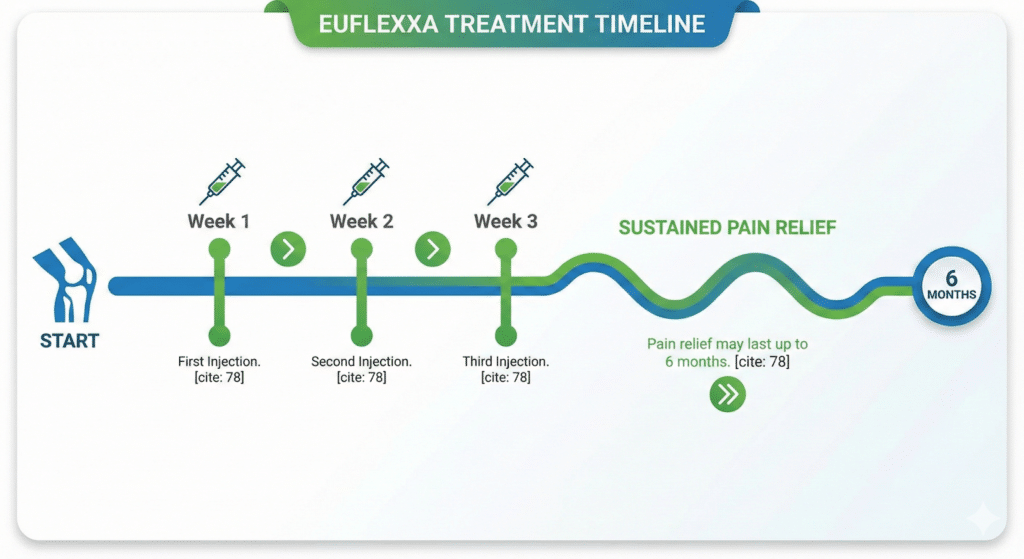
The treatment consists of three injections given at weekly intervals. Each injection delivers 20 mg of sodium hyaluronate in a 2 mL dose directly into the knee joint. As noted on the clinic’s Euflexxa information page, the procedure is performed in the office setting without the need for hospitalization.
FLEXX Trial: The Definitive Study on Euflexxa Success Rates
The FLEXX Trial (Ferring’s Long-term Efficacy and Safety Extension Study) remains the foundational clinical study demonstrating Euflexxa’s effectiveness. Published in Seminars in Arthritis and Rheumatism in 2009, this multicenter, double-blind, saline-controlled study provides the most robust data on Euflexxa outcomes.
Study Design and Population
The trial enrolled 588 subjects with chronic knee osteoarthritis who were randomized to receive either three weekly intra-articular injections of Euflexxa (n=293) or buffered saline placebo (n=295). The FDA Summary of Safety and Effectiveness Data documents that the study was conducted at 37 sites in the United States between October 2006 and December 2007. Approximately 88% of randomized subjects completed the 26-week study period, with similar completion rates in both treatment groups.
Primary Outcome Results
The primary efficacy measure was the change in pain scores from baseline to week 26 following a 50-foot walk test, measured using a 100-mm visual analog scale (VAS). According to the published trial results:
- Euflexxa group: Mean VAS scores decreased by 25.7 mm
- Saline control group: Mean VAS scores decreased by 18.5 mm
- Difference in least-squares means: -6.6 mm (P = 0.002)
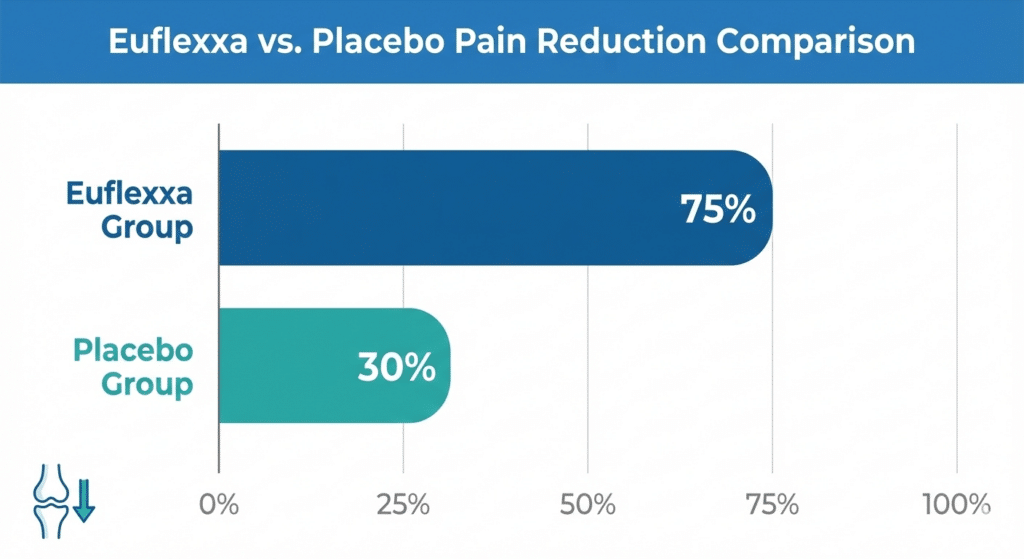
When expressed as percentages, the Euflexxa group achieved a median pain reduction of 53% from baseline, compared to a 38% reduction in the saline group. This statistically significant difference (P = 0.002) established Euflexxa’s superiority over placebo.
Pain-Free Outcomes
Perhaps the most compelling finding from the clinical data involves the proportion of patients who achieved pain-free status. According to Euflexxa’s official website, nearly two-thirds (approximately 66%) of Euflexxa patients were pain-free at the end of the 12-week study period. Pain-free status was defined as symptom-free for the five WOMAC pain questions with average VAS scores of less than 20mm.
Secondary Outcome Measures
The FLEXX Trial also assessed multiple secondary endpoints, all of which showed significant improvement with Euflexxa treatment:
OARSI Responder Index: The Osteoarthritis Research Society International responder rate was significantly higher in the Euflexxa group compared to saline at both Week 12 and Week 26.
WOMAC Subscales: Patients treated with Euflexxa experienced significant improvements in the Western Ontario McMaster University Osteoarthritis Index subscales measuring pain, disability, and joint stiffness.
Patient Global Assessment: Subjects rated their overall improvement significantly higher with Euflexxa versus saline.
Health-Related Quality of Life: SF-36 measurements showed significant improvements in quality of life metrics among Euflexxa-treated patients.
Comparative Effectiveness: Euflexxa vs. Other Treatments
Understanding how Euflexxa compares to other knee osteoarthritis treatments helps patients and physicians make informed decisions.
Euflexxa vs. Synvisc
A 12-week double-blind study conducted at 10 centers in Germany compared Euflexxa directly against Synvisc (another FDA-approved hyaluronic acid injection) in 321 patients with stage 2-3 knee osteoarthritis. According to the FDA prescribing information, patients received either Euflexxa (160 patients) or Synvisc (161 patients) as weekly injections for three weeks.
The results demonstrated that both treatment groups experienced statistically significant and clinically meaningful improvements from baseline (P<0.0001). Importantly, Euflexxa demonstrated non-inferiority to Synvisc as measured by mean change from baseline to Week 12 in average WOMAC pain scores. Notably, the Euflexxa group experienced fewer adverse events: knee joint effusion was reported by only 1 patient in the Euflexxa group compared to 9 patients in the Synvisc group.
Real-World Evidence from Claims Data
A retrospective analysis published in the journal ClinicoEconomics and Outcomes Research examined real-world outcomes among 50,399 knee osteoarthritis patients who received various hyaluronic acid treatments. The study, which used IMS Health’s PharMetrics Plus database, found that patients treated with Euflexxa had longer delays to total knee replacement compared to those treated with Synvisc.
The analysis showed that Supartz/Hyalgan, Euflexxa, and Orthovisc patients all experienced longer times before requiring knee replacement surgery compared to Synvisc patients, suggesting potential differences in long-term outcomes among viscosupplementation products.
Duration of Relief
According to Euflexxa’s official prescribing information, pain relief can begin as early as one week after the first injection and continues to improve after each subsequent injection. Clinical studies have shown that the benefits of Euflexxa treatment can last up to six months. The manufacturer notes that clinical studies confirm getting all three injections improves the pain relief patients may experience.
Who Is a Good Candidate for Euflexxa?
Euflexxa is not appropriate for every patient with knee pain. Understanding the ideal candidate profile helps ensure optimal outcomes.
FDA-Approved Indications
According to the FDA-approved labeling, Euflexxa is indicated for the treatment of pain in osteoarthritis of the knee in patients who have failed to respond adequately to:
- Conservative non-pharmacologic therapy (such as physical therapy)
- Simple analgesics (such as acetaminophen)
Prognostic Factors for Success
Post-hoc analyses of the FLEXX and FLEXX Extension trials, published by Altman and colleagues, identified factors that may predict successful outcomes with Euflexxa therapy. According to information on Euflexxa’s healthcare provider website, these analyses evaluated patients receiving Euflexxa to identify characteristics associated with better or less successful outcomes.
The Kellgren-Lawrence (KL) grading system, which classifies osteoarthritis severity based on radiographic findings, appears relevant to outcomes. In the analyzed population, patients with KL grade 2 (n=235) and KL grade 3 (n=353) both showed benefits, though response patterns may differ based on disease severity.
Contraindications
According to Euflexxa’s prescribing information, the treatment should NOT be used in patients who:
- Have had any previous allergic reaction to Euflexxa or hyaluronan products
- Have a knee joint infection
- Have skin diseases or infections around the injection site
The product has not been tested in pregnant women, nursing mothers, or children under 18 years of age.
What Arizona Pain and Spine Institute Patients Can Expect
Arizona Pain and Spine Institute has established comprehensive protocols for patients considering Euflexxa treatment.
Initial Consultation
As described on the clinic’s website, patients begin with a comprehensive consultation and evaluation with Dr. Khan or Dr. Ryklin. During this visit, the physician will review medical history, assess the severity of osteoarthritis, and determine whether Euflexxa is appropriate for the patient’s specific condition. The doctors consider factors including previous treatments attempted, current health status, and treatment goals.
The Treatment Process
According to Arizona Pain and Spine Institute’s published information on Euflexxa:
Injection Procedure: Each injection appointment involves the physician cleaning the knee area, potentially using local anesthetic for comfort, and precisely injecting the Euflexxa into the joint space. The clinic utilizes imaging technology to ensure accurate needle placement.
Treatment Schedule: Patients receive three injections, spaced one week apart. Completing the full series is important for optimal outcomes, as clinical studies demonstrate that pain relief continues to improve after each injection.
Post-Injection Care: The Euflexxa prescribing information advises patients to avoid strenuous physical activities for 48 hours after each injection, including jogging, tennis, heavy lifting, or standing for extended periods (more than one hour at a time).
Timeline of Results
Based on clinical trial data and information from Arizona Pain and Spine Institute’s website:
- Week 1: Some patients notice initial relief after the first injection
- Weeks 2-3: Pain relief typically continues to build with each injection
- Week 4-5: Most patients experience meaningful improvement approximately two weeks after completing the three-injection series
- Weeks 6-26: Benefits can continue for up to six months
Combining Euflexxa with Other Treatments
Arizona Pain and Spine Institute emphasizes a comprehensive approach to knee osteoarthritis management. As noted on their website, the doctors believe in combining Euflexxa with other proven strategies for optimal results:
Physical Therapy: Working with a physical therapist can enhance outcomes by strengthening muscles around the knee, improving flexibility, and optimizing joint mechanics.
Lifestyle Modifications: Maintaining a healthy weight reduces stress on the knee joint. The clinic recommends appropriate exercise and activity modifications to support long-term joint health.
Comprehensive Pain Management: For some patients, Euflexxa may be part of a broader treatment plan that includes other interventions offered at Arizona Pain and Spine Institute, such as PRP therapy for knee pain or additional joint injection treatments.
Safety Profile and Side Effects
The clinical trial data provides detailed information on Euflexxa’s safety profile.
Adverse Events in Clinical Trials
According to the FLEXX Trial results, both Euflexxa and saline injections were well tolerated with a low incidence of adverse events equally distributed between groups. Injection-site reactions were reported by only 1 patient (<1%) in the saline group and 2 patients (1%) in the Euflexxa group.
The most common adverse events related to Euflexxa injections reported in clinical studies include:
- Arthralgia (joint pain)
- Back pain
- Pain in extremity
- Musculoskeletal pain
- Joint swelling
In the German comparative study against Synvisc, 54 patients (33.8%) in the Euflexxa group reported adverse events compared to 65 patients (40.4%) in the control group. There were no deaths reported during the study.
Open-Label Extension Safety
An open-label safety extension of the FLEXX Trial, published by Altman and colleagues in Osteoarthritis and Cartilage in 2011, evaluated the safety and efficacy of repeat Euflexxa treatment. At Week 52, the most common adverse events related to Euflexxa remained arthralgia and joint swelling, consistent with the original trial findings.
The Knee Osteoarthritis Landscape
Understanding the broader context of knee osteoarthritis helps illustrate why effective treatments like Euflexxa matter.
Prevalence Statistics
According to data from the Osteoarthritis Action Alliance citing CDC estimates, osteoarthritis affects 32.5 million US adults, making it the most common form of arthritis. The knee is the joint most commonly affected, accounting for approximately 60-85% of all osteoarthritis cases according to a 2024 review published in Therapeutic Advances in Musculoskeletal Disease.
Research published in PNAS (Proceedings of the National Academy of Sciences) revealed that knee osteoarthritis prevalence has doubled since the mid-20th century. The study found that after controlling for age, BMI, and other variables, knee osteoarthritis prevalence was 2.1-fold higher in modern populations compared to early industrial-era samples.
Economic Impact
The direct costs of osteoarthritis treatment in the United States are substantial. According to the PNAS study, knee osteoarthritis treatment costs between $5.7 and $15 billion USD annually. A 2024 epidemiological study published in the Journal of the American Academy of Orthopaedic Surgeons projected that if current trends continue, healthcare expenditures could increase by an additional $1-3 billion by 2030.
Conclusion
The FLEXX Trial’s documented 53% median pain reduction and the finding that nearly two-thirds of patients achieved pain-free status at 12 weeks establish Euflexxa as an evidence-based treatment option for knee osteoarthritis. For patients who have not found adequate relief from conservative treatments and want to avoid or delay surgical intervention, Euflexxa offers a clinically validated path forward.
At Arizona Pain and Spine Institute, Dr. Khan and Dr. Ryklin combine this FDA-approved viscosupplementation therapy with comprehensive evaluation and personalized treatment planning. Their approach—using imaging guidance for precise injection placement and integrating Euflexxa with other evidence-based interventions—reflects best practices in modern pain management.
Next Step: Contact Arizona Pain and Spine Institute at (480) 986-7246 to schedule a consultation and determine whether Euflexxa is appropriate for your knee osteoarthritis. The practice serves patients throughout the East Valley from locations in Mesa, Gilbert, and Queen Creek.
Frequently Asked Questions
Q: What is the success rate of Euflexxa injections?
A: The FLEXX Trial showed Euflexxa achieved a 53% median pain reduction at 26 weeks, and nearly two-thirds of patients were pain-free at 12 weeks. Individual results vary based on osteoarthritis severity and other factors.
Q: How long does it take for Euflexxa to work?
A: According to Euflexxa’s prescribing information, pain relief can begin as early as one week after the first injection and continues to improve with each of the three weekly injections. Most patients notice meaningful improvement within 2-5 weeks.
Q: How long does Euflexxa pain relief last?
A: Clinical studies show Euflexxa benefits can last up to six months. Some patients may benefit from repeat treatment courses, which the open-label extension study found to be safe and effective.
Q: Is Euflexxa covered by insurance?
A: Many insurance plans cover Euflexxa for qualifying patients with knee osteoarthritis who have not responded to conservative treatments. Arizona Pain and Spine Institute can help verify coverage and discuss payment options.
Q: What are the side effects of Euflexxa?
A: The most common side effects in clinical trials were joint pain, back pain, limb pain, muscle pain, and joint swelling. Serious adverse events were rare, and injection-site reactions occurred in only 1% of patients.
Disclaimer
This article references publicly available information from Ferring Pharmaceuticals (Euflexxa manufacturer), the U.S. Food and Drug Administration, Arizona Pain and Spine Institute, peer-reviewed publications in Seminars in Arthritis and Rheumatism, Osteoarthritis and Cartilage, Orthopedic Reviews, and the Osteoarthritis Action Alliance, including official documentation, prescribing information, clinical trial results, and published case studies dated 2009-2024. All metrics and quotes are from documented sources. Results described represent clinical trial population averages; individual outcomes may vary based on osteoarthritis severity, overall health, and adherence to treatment protocols. For current information about Euflexxa or services offered at Arizona Pain and Spine Institute, consult the provider directly at gotpainarizona.com. This content does not constitute medical advice. Consult a qualified healthcare provider for diagnosis and treatment recommendations.