 Get an appointment within days, not weeks or months

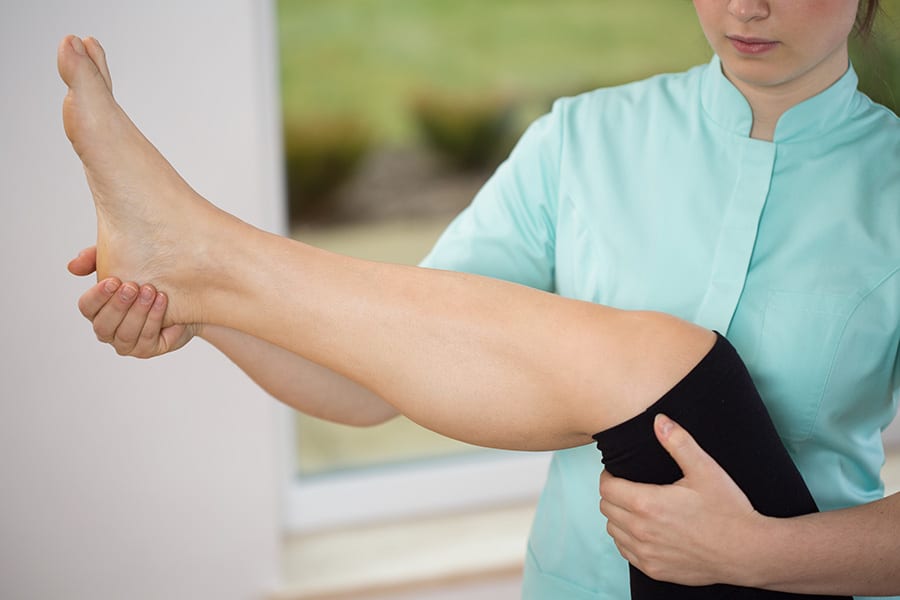
When patient Forrest Hammer came to Arizona Pain and Spine Institute, he struggled with basic daily activities. After receiving regenerative medicine treatment, he reported being “able to walk, able to perform tasks that I couldn’t for a long time, like daily walking, bending over, carrying groceries and enjoying a movie at the cinema.” His experience reflects what many patients discover: the right treatment combined with proper recovery protocols can restore the active lifestyle you’ve been missing. This guide from Arizona Pain and Spine Institute explains exactly when and how to safely return to exercise after PRP therapy, helping you achieve optimal healing and get back to the activities you love.
Understanding PRP Recovery: The Arizona Pain and Spine Institute Approach

At Arizona Pain and Spine Institute, Dr. Asim Khan and Dr. Daniel Ryklin have been delivering regenerative medicine treatments since 2016, helping hundreds of patients across Mesa, Queen Creek, and East Mesa restore function and reduce chronic pain. Both physicians are double board certified in Physical Medicine and Rehabilitation (PMR) and Pain Management, as well as fellowship trained in interventional pain management.
The practice specializes in amniotic membrane regenerative medicine, a type of stem cell therapy that promotes natural healing for a variety of conditions. As the Arizona Pain and Spine Institute team explains, regenerative medicine uses the body’s own healthy cells to transform and regenerate damaged or depleted tissue—giving your system the support it needs to heal itself without invasive medical intervention.
Why Recovery Protocols Matter
Understanding the exercise recovery timeline after PRP therapy is essential because the treatment works by triggering a specific biological response. Unlike cortisone injections that simply mask pain, PRP initiates actual tissue repair at the cellular level.
According to the American Academy of Orthopaedic Surgeons (AAOS), platelet-rich plasma contains growth factors that are very important in the healing of injuries. When these growth factors are delivered to an injured site in high concentrations, they jumpstart the body’s natural healing mechanisms.
Get Back Your Normal Life Again
As pain specialists, we can guarantee that we are more than qualified in alleviating your pain and treating your condition.
Arizona Pain and Spine Institute’s regenerative treatments take between 5-15 minutes to administer, are non-invasive, and require no painful extraction. However, patients must follow specific post-procedure protocols to maximize results. Rushing back to exercise too quickly can disrupt the healing cascade that makes PRP effective.
The Three Phases of Healing After PRP Therapy
When you receive PRP therapy at Arizona Pain and Spine Institute, your body moves through distinct healing phases. Understanding these phases helps you know what to expect and when you can safely increase activity.
Phase 1: The Inflammatory Response (Days 1-7)
The first week after your PRP injection is critical. The concentrated platelets release growth factors including platelet-derived growth factor, vascular endothelial growth factor, and transforming growth factor beta. These proteins attract healing cells to the injection site and begin the repair process.
During this phase, you may experience mild to moderate soreness, swelling, and warmth around the treated area. This is a normal and necessary part of healing—not a complication. The inflammation signals that your body is responding to the treatment.
What to do during Phase 1:
- Rest for the first 24-48 hours, but do not stay completely sedentary
- Perform only light household activities
- Apply ice to the treated area for 15-20 minutes several times daily
- Avoid anti-inflammatory medications (NSAIDs) such as ibuprofen, aspirin, naproxen, and Aleve
- Use acetaminophen (Tylenol) if needed for pain management
The restriction on NSAIDs is crucial. These medications work by reducing inflammation—the very response your PRP treatment is designed to create. Taking NSAIDs can significantly reduce the effectiveness of your treatment.
Phase 2: Tissue Regeneration (Weeks 2-4)
During the second phase, the growth factors released by platelets stimulate tissue repair and collagen production. Many patients begin noticing decreased pain and improved function during this period.
What to do during Phase 2:
- Begin gentle walking for exercise
- Start simple range-of-motion exercises to decrease stiffness
- Consider beginning physical therapy (typically around days 10-14)
- Continue avoiding NSAIDs
- Avoid running, jumping, or weight-bearing exercises
- Limit stair climbing if you received hip or knee injections
The Arizona Pain and Spine Institute team emphasizes that working with a physical therapist who understands regenerative medicine protocols is important during this phase. As patient Jeanne Neathery shared after seven years of treatment with Dr. Ryklin, “He definitely finds what pain management meets your individual needs.”
Phase 3: Tissue Remodeling (Weeks 4-12)
Around the fourth week, newly formed tissue begins maturing and becoming more resilient. This is when patients typically start experiencing significant improvement in both pain reduction and mobility.
What to do during Phase 3:
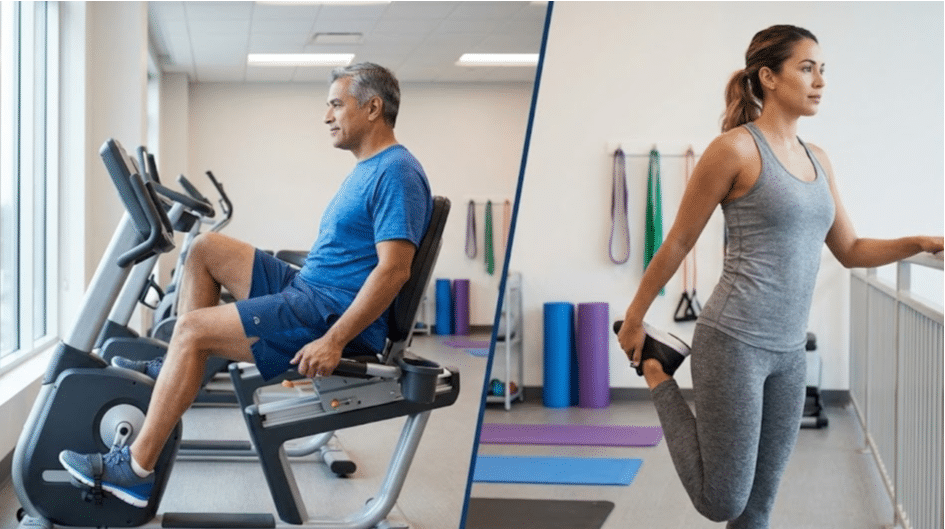
- Introduce low-impact aerobic exercises like stationary cycling or elliptical training
- Begin light resistance exercises as tolerated
- Progress to more normal activities based on pain response
- Continue physical therapy exercises
- Monitor your body’s response—soreness is acceptable, but sharp pain is not
By weeks 8-12, most patients can begin returning to their normal workout routines and recreational activities, provided earlier phases generated little to no pain.
Week-by-Week Exercise Recovery Timeline
Arizona Pain and Spine Institute recommends the following general timeline for returning to exercise after PRP therapy. Your specific timeline may vary based on the treatment area and your individual healing response.
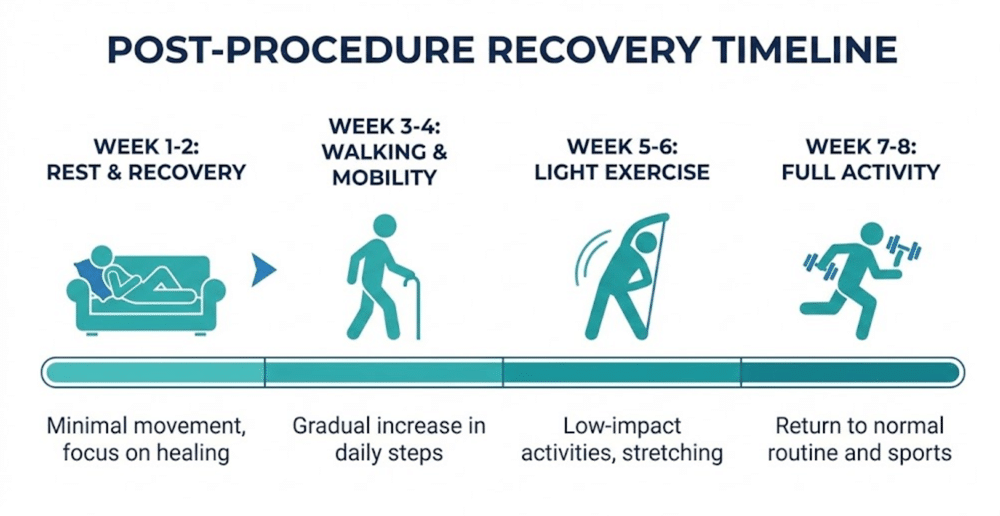
Week 1: Rest and Protect
- Days 1-2: Focus on rest with only light movement around the house
- Days 3-7: Begin gentle walking for short distances; move the treated joint through its range of motion without resistance
- Avoid: Running, weight training, high-impact activities, stairs (for lower extremity treatments)
Week 2: Gentle Movement
- Continue gentle walking, gradually increasing duration
- Begin range-of-motion exercises as directed
- Start physical therapy if recommended by your physician
- Avoid: Resistance exercises, sports activities, prolonged standing
Weeks 3-4: Progressive Activity
- Begin isometric exercises (muscle contractions without joint movement)
- Add stationary cycling with low resistance
- Continue physical therapy exercises
- Gradually increase walking distance and pace
- Avoid: Running, jumping, heavy lifting
Weeks 5-6: Building Strength
- Introduce light resistance training
- Add elliptical or rowing machine workouts
- Continue progressing physical therapy
- Begin gentle stretching routines
- Avoid: High-impact activities, competitive sports
Weeks 7-8: Advancing Activity
- Progress resistance training intensity
- Introduce sport-specific movements at reduced intensity
- Consider returning to swimming or water exercises
- Continue monitoring pain response
Weeks 9-12: Return to Normal Activity
- Gradually return to running (if applicable)
- Resume recreational sports with caution
- Continue maintenance exercises
- Schedule follow-up with Arizona Pain and Spine Institute to assess progress
As patient Kim LindL noted about her experience with Dr. Khan, “I’ve been getting epidurals and shots in my foot and lower back for about 4 years now, he is very good and I would never go to another place.” This long-term relationship with your treatment team ensures your recovery stays on track.
Exercises to Avoid After PRP Therapy
Certain activities can interfere with healing and should be avoided during your PRP recovery:
During the first two weeks:
- Running or jogging
- Jumping or plyometric exercises
- Heavy weight lifting
- High-impact aerobics
- Contact sports
- Repetitive stress on the treated area
Throughout recovery:
- Any exercise that causes sharp pain
- Activities that stress the treated joint beyond its current capacity
- Exercises performed without proper warm-up
Special Considerations by Treatment Area
Knee PRP Recovery
Knee injections are among the most common PRP treatments at Arizona Pain and Spine Institute. For knee recovery:
- Limit stair climbing during the first two weeks
- Focus on quadriceps strengthening once cleared for exercise
- Use a recumbent bike rather than upright cycling initially
- Progress to walking on flat surfaces before adding inclines
Patient Lacey Smithson shared that Arizona Pain and Spine Institute “helped decrease my mom’s back pain by 80%! Everyone with pain should go to this place!” Similar improvements are often seen with knee treatments when proper recovery protocols are followed.
Shoulder PRP Recovery
Shoulder treatments require careful attention to range of motion:
- Wear a sling if recommended during the first few days
- Focus on gentle pendulum exercises early in recovery
- Avoid overhead movements until cleared by your physician
- Progress to resistance band exercises before weights
Hip PRP Recovery
Hip treatments may require:
- Using a walker or crutches initially if recommended
- Avoiding prolonged sitting in low chairs
- Gentle hip flexor stretches once approved
- Water walking as an early form of exercise
Why Choose Arizona Pain and Spine Institute for Your PRP Therapy
Arizona Pain and Spine Institute brings more than two decades of innovation and experience in regenerative therapy. The practice partners with industry leaders in amniotic tissue biotechnology, using products manufactured in an American Association of Tissue Banks (AATB) accredited facility.
Key differentiators include:
- Products made with amnion and free from chorion to eliminate transplant rejection risk
- Carefully tested materials free from all transmittable disease
- Ultrasound-guided injection techniques for precise placement
- Customized treatment plans based on individual patient needs
- Patient backgrounds ranging from teen athletes to professional athletes including golfers, tennis players, and UFC fighters
As patient Tim Tuzon explained, “Been with Khan for over a year and wouldn’t want to be anywhere else. He is not a pharmacy! He solves the issues instead of hiding them with tons of drugs.”
Conclusion
Forrest Hammer’s experience—going from limited mobility to walking, carrying groceries, and enjoying movies again—demonstrates what’s possible when regenerative medicine treatment is combined with proper recovery protocols. By following the week-by-week exercise guidelines outlined above and working closely with the Arizona Pain and Spine Institute team, you can optimize your PRP therapy results and return to the activities you love.
Ready to explore whether PRP therapy is right for you? Schedule a consultation with Arizona Pain and Spine Institute at one of our Mesa, East Mesa, or Queen Creek locations. Call 480-986-7246 or book online through our FastTrack program for expedited appointments.
FAQ SECTION
How long after PRP injection can I exercise?
Light walking is typically permitted within 3-7 days. More vigorous exercise usually resumes around weeks 4-6, with full activity by weeks 8-12 depending on healing progress.
Can I take ibuprofen after PRP therapy?
No. NSAIDs like ibuprofen interfere with the inflammatory response that makes PRP effective. Use acetaminophen (Tylenol) instead, and avoid NSAIDs for at least 2-4 weeks post-procedure.
When should I start physical therapy after PRP?
Most patients begin gentle physical therapy 10-14 days after PRP injection. Arizona Pain and Spine Institute can recommend therapists familiar with regenerative medicine protocols.
Will I need multiple PRP treatments?
Treatment needs vary by individual and condition. Arizona Pain and Spine Institute creates customized treatment plans, and follow-up appointments monitor your healing progress.
How soon will I feel results from PRP therapy?
Initial relief may occur within 4-6 weeks, though full benefits often develop over 3-6 months as tissue regeneration and remodeling complete.
DISCLAIMER
This article references publicly available information from Arizona Pain and Spine Institute, the American Academy of Orthopaedic Surgeons, and the Hospital for Special Surgery, including official documentation, patient testimonials, and published medical guidelines dated 2016-2025. All patient quotes are from verified reviews on Arizona Pain and Spine Institute’s website. Results described are specific to individual patients and may vary based on condition, treatment area, and adherence to recovery protocols. This content is for informational purposes only and does not constitute medical advice. For current information about PRP therapy and personalized treatment recommendations, schedule a consultation with Arizona Pain and Spine Institute.