 Get an appointment within days, not weeks or months

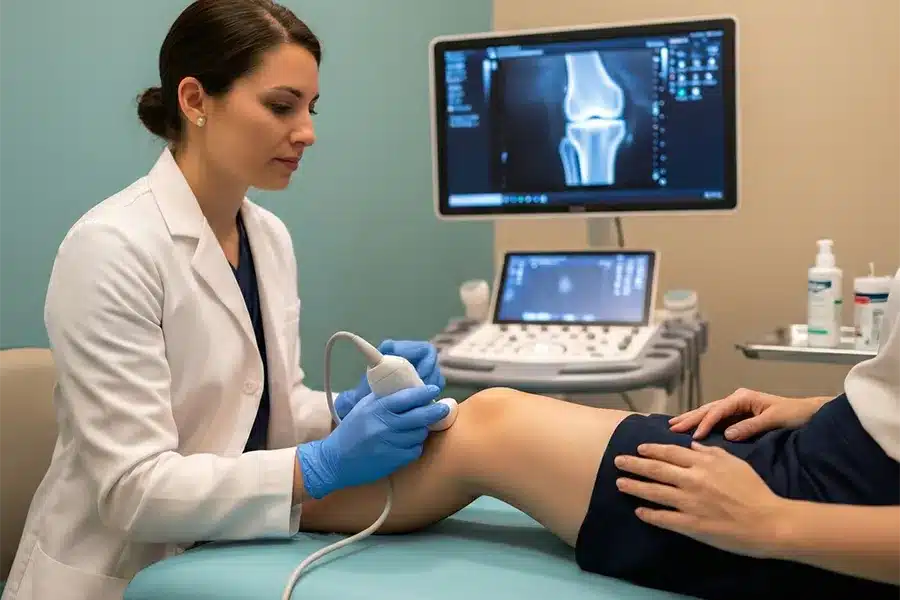
The American Joint Replacement Registry’s 2024 Annual Report — published by the American Academy of Orthopaedic Surgeons — now tracks over 4.3 million hip and knee arthroplasty procedures performed across 1,447 institutions in all 50 states. Approximately 700,000 total knee replacements are performed annually in the United States, according to the AAOS, and projections from The Journal of Rheumatology estimate that number could exceed 1.2 million annually by 2030.
But knee replacement is major surgery with a months-long recovery — and not every patient with Knee Arthritis Treatment osteoarthritis needs one. At Arizona Pain and Spine Institute in Mesa, Dr. Asim Khan and Dr. Daniel Ryklin use regenerative medicine — specifically amniotic tissue biotechnology — to help patients with knee arthritis find relief without surgery. This article examines what the research shows, how the practice applies it, and who may be an appropriate candidate.
What Knee Osteoarthritis Is — And Why It Drives So Many Surgeries
Knee Arthritis Treatment osteoarthritis (OA) is the most common degenerative joint disease, characterized by the progressive breakdown of cartilage — the smooth tissue that cushions the ends of bones where they meet at the joint. As cartilage wears away, bone begins to rub against bone, causing pain, swelling, stiffness, and reduced mobility.
The numbers are striking. A 2021 review published in JAMA by Katz, Arant, and Loeser estimates that nearly half of all American adults will develop symptomatic Knee Arthritis Treatment osteoarthritis in at least one knee during their lifetime. According to the AAOS, 80% of osteoarthritis patients experience some degree of movement limitation, and the condition is the single most common reason patients undergo total knee replacement.
Traditional treatment for knee OA follows a well-established ladder: over-the-counter pain medications and anti-inflammatories, physical therapy, corticosteroid injections, hyaluronic acid injections (viscosupplementation), and — when these measures no longer provide adequate relief — total Knee Arthritis Treatment replacement. A 2025 review published in Experimental & Molecular Medicine (Nature) notes that traditional treatments such as NSAIDs “primarily offer symptom relief without halting disease progression,” which is precisely the limitation that regenerative medicine aims to address.
Get Back Your Normal Life Again
As pain specialists, we can guarantee that we are more than qualified in alleviating your pain and treating your condition.
How Regenerative Medicine Works for Knee Arthritis — The Science
Regenerative medicine for knee osteoarthritis represents a fundamentally different approach from traditional treatments. Rather than masking pain or replacing the joint entirely, regenerative therapies aim to support the body’s own healing processes — reducing inflammation, protecting remaining cartilage, and potentially promoting tissue repair.
The Role of Mesenchymal Stem Cells
The scientific foundation for regenerative Knee Arthritis Treatment rests on mesenchymal stem cells (MSCs) — cells that can be sourced from bone marrow, adipose tissue, umbilical cord tissue, and amniotic fluid. These cells have demonstrated the ability to modulate immune responses, reduce inflammation, and create a favorable environment for tissue repair.
A March 2024 Phase I dose-escalation clinical trial published in Stem Cells Translational Medicine by Matas et al. evaluated umbilical cord-derived MSCs in Knee Arthritis Treatment osteoarthritis patients. The study found dose-dependent therapeutic effects, with the higher-dose group showing better outcomes in both preclinical models and human subjects. The researchers documented significant improvements in bone mineral density and cartilage protection compared to control groups.
A systematic review published in PMC examining seven studies with 385 patients who received umbilical cord-derived MSC injections for knee OA found that weighted averages across multiple outcome measures — including the WOMAC pain and function index, visual analog scale (VAS) for pain, and the ICRS cartilage repair score — all showed improvement from before to after treatment over a mean follow-up period of 23.4 months.
Amniotic Tissue Specifically
Arizona Pain and Spine Institute describes itself as “worldwide innovators in amnio technology” and uses amniotic tissue-based regenerative treatments as a core clinical offering. The scientific rationale for amniotic tissue is well-documented in the research literature. A 2020 prospective pilot study published in Orthopedic Research and Reviews evaluated injectable amniotic membrane/umbilical cord particulate specifically for moderate-to-severe knee osteoarthritis and documented clinical improvements in patients receiving the treatment.
A 2022 study published in Regenerative Medicine by Olufade et al. compared amniotic dehydrated cell and protein concentrate versus corticosteroid injection for Knee Arthritis Treatment OA. The preliminary findings demonstrated that amniotic-based treatment showed comparable or favorable outcomes to corticosteroid injections — notably without the joint-degrading effects that repeated corticosteroid injections are known to produce over time.
The biological mechanism behind amniotic tissue treatments involves the paracrine activity of the cells — meaning they release growth factors, cytokines, and other bioactive molecules that reduce inflammation and support tissue repair in the joint environment. As the practice’s published materials explain, their stem cell therapy “works by injecting these cells directly into the area with pain” where they “start to heal damaged tissues and reduce inflammation.”
How Arizona Pain and Spine Institute Applies Regenerative Medicine to Knee Arthritis
At Arizona Pain and Spine Institute, regenerative medicine for knee pain is delivered through a structured clinical process at the practice’s Mesa and Queen Creek locations.
The Evaluation
The process begins with the comprehensive initial evaluation that the practice is known for. Dr. Ryklin has stated publicly that these evaluations “typically last 60 minutes or more” and focus on understanding “not just where you hurt, but how your pain affects your life and what specific activities you want to return to.” For Knee Arthritis Treatment arthritis specifically, this means assessing the severity of cartilage loss (often via imaging), the patient’s pain levels and functional limitations, prior treatments attempted, and realistic goals for improvement.
The Procedure
Based on the practice’s published information, the regenerative medicine injection itself is a minimally invasive outpatient procedure. The practice states that the treatment “usually only takes 5 to 15 minutes and doesn’t have a long recovery period.” The amniotic tissue product is injected directly into the Knee Arthritis Treatment joint, where the bioactive components begin their work of reducing inflammation and supporting the healing environment.
This stands in stark contrast to total Knee Arthritis Treatment replacement, which involves a hospital stay, a recovery period of weeks to months, extensive physical therapy, and carries risks including infection, blood clots, and implant complications. While knee replacement has high success rates — the AAOS reports that more than 90% of patients experience a dramatic reduction in knee pain — it is also irreversible and comes with a finite implant lifespan (approximately 85% of knee replacements last 20 years).
The Multimodal Approach
Dr. Khan has emphasized that effective pain management requires multiple tools. As quoted on the practice’s website, “A doctor who only offers one type of treatment — whether that’s medications, injections, or even regenerative therapy alone — is like a carpenter with just one tool.” For knee arthritis patients, this may mean combining regenerative medicine with joint injections, physical therapy recommendations, and lifestyle modifications to optimize outcomes.
The practice also offers other relevant treatments for knee arthritis patients, including joint injections with corticosteroids or hyaluronic acid, radiofrequency ablation for targeted nerve pain, and the FastTrack cash-pay program for patients who need expedited access to care.
What Patients Can Realistically Expect — Outcomes and Limitations
Regenerative medicine for Knee Arthritis Treatment osteoarthritis is a rapidly evolving field. The evidence is promising, but patients should understand both what the research supports and where limitations remain.
What the Research Supports
The systematic review of umbilical cord-derived MSCs for Knee Arthritis Treatment OA (385 patients, mean follow-up 23.4 months) documented improvements across all measured outcomes — pain scores, function scores, and cartilage quality scores. The 2024 Phase I clinical trial in Stem Cells Translational Medicine demonstrated dose-dependent efficacy and safety in human subjects. The 2022 amniotic tissue vs. corticosteroid study found favorable preliminary results for the regenerative approach.
Arizona Pain and Spine Institute’s own published materials state that “many patients begin feeling significant improvements within weeks of the procedure.” The practice positions regenerative medicine as an approach that “doesn’t just mask the pain; it addresses the root cause.”
Important Limitations to Understand
A 2025 Cochrane systematic review (the gold standard for evidence synthesis) examined stem cell injections for knee osteoarthritis and found that while the evidence suggests benefit, many studies remain small, short in follow-up, and heterogeneous in methodology. The review called for additional large-scale, randomized, placebo-controlled trials to confirm long-term efficacy. A 2025 meta-analysis in Frontiers in Medicine examining contextual effects of MSC injections for Knee Arthritis Treatment OA similarly noted the need for more rigorous trial designs.
Patients should also understand that regenerative medicine for Knee Arthritis Treatment OA is not a one-size-fits-all solution. The degree of improvement depends on multiple factors, including the severity of cartilage loss (earlier-stage OA generally responds better than advanced disease), the patient’s overall health and weight, activity levels and adherence to complementary treatments, and whether underlying conditions (like obesity or metabolic syndrome) are also being managed. Regenerative medicine may delay or prevent the need for knee replacement in some patients, but it is not a guaranteed permanent cure for osteoarthritis.
Who Should Consider Regenerative Medicine vs. Knee Replacement
Based on the clinical literature and Arizona Pain and Spine Institute’s published approach, the following framework can help patients evaluate their options:
Regenerative medicine may be most appropriate for patients who:
- Have mild-to-moderate knee osteoarthritis (Kellgren-Lawrence Grade II–III on imaging)
- Have not found adequate relief from physical therapy, oral medications, and standard injections
- Want to avoid or delay major surgery
- Are willing to participate in a comprehensive treatment plan that may include lifestyle modifications
- Have realistic expectations about outcomes — improvement in pain and function, not necessarily complete cartilage restoration
Total knee replacement may be more appropriate for patients who:
- Have severe, end-stage knee osteoarthritis (Kellgren-Lawrence Grade IV) with bone-on-bone contact
- Have exhausted non-surgical options including regenerative approaches
- Experience significant daily functional limitations that substantially reduce quality of life
- Are medically fit for major surgery and post-operative rehabilitation
Arizona Pain and Spine Institute’s comprehensive evaluation process is specifically designed to help patients determine where they fall on this spectrum.
How to Take the Next Step
For Knee Arthritis Treatment arthritis patients in the East Valley exploring alternatives to surgery, the pathway is straightforward:
- Schedule a Consultation: Contact Arizona Pain and Spine Institute at (480) 986-7246 or visit gotpainarizona.com. The FastTrack program provides appointments within days for patients who want expedited access.
- Bring Your Imaging: If you have recent knee X-rays or MRIs, bring them to your appointment. If not, the practice can coordinate imaging as part of the evaluation.
- Discuss Your Goals: The 60+ minute initial evaluation focuses on understanding your specific situation — what activities you want to return to, what you’ve already tried, and what outcomes would make treatment worthwhile for you.
- Receive Your Treatment Plan: Based on the evaluation, Dr. Khan or Dr. Ryklin will outline an individualized plan that may include regenerative medicine, joint injections, complementary therapies, or a combination.
Conclusion
With over 700,000 knee replacements performed annually in the United States — and projections pushing that number past 1.2 million by 2030 — the demand for effective non-surgical alternatives has never been greater. Regenerative medicine, supported by Phase I clinical trials, systematic reviews, and a growing body of peer-reviewed evidence on amniotic and umbilical cord-derived treatments, represents a fundamentally different approach: working with the body’s own healing mechanisms rather than replacing the joint entirely.
Arizona Pain and Spine Institute’s specialization in amniotic tissue biotechnology, combined with their multimodal approach to pain management, positions the practice to offer knee arthritis patients in Mesa, Gilbert, Queen Creek, Chandler, Scottsdale, and Tempe an evidence-based alternative worth evaluating before committing to surgery. The next step is a conversation. Call (480) 986-7246 or schedule through gotpainarizona.com.
Frequently Asked Questions
1. Can regenerative medicine actually help knee arthritis?
A systematic review of 385 patients who received umbilical cord-derived MSC injections for Knee Arthritis Treatment OA showed improvements in pain, function, and cartilage quality across a mean follow-up of 23.4 months. A 2024 Phase I trial in Stem Cells Translational Medicine also demonstrated dose-dependent efficacy.
2. How long does a regenerative medicine knee injection take?
Arizona Pain and Spine Institute states the injection procedure typically takes 5 to 15 minutes with no extended recovery period. Patients generally resume normal activities quickly, unlike knee replacement which requires months of rehabilitation.
3. Is regenerative medicine for knee arthritis covered by insurance?
Coverage varies by insurance plan and specific treatment. Arizona Pain and Spine Institute offers the FastTrack cash-pay program for patients who want immediate access without waiting for insurance authorization. Call (480) 986-7246 for details.
4. What type of regenerative treatment does Arizona Pain and Spine Institute use?
The practice specializes in amniotic tissue biotechnology and describes itself as “worldwide innovators in amnio technology.” This treatment uses bioactive components from amniotic tissue to reduce inflammation and support the body’s natural healing processes.
5. How do I know if I’m a candidate for regenerative medicine vs. knee replacement?
Patients with mild-to-moderate Knee Arthritis Treatment osteoarthritis who have not found relief from standard treatments are often the best candidates for regenerative medicine. Arizona Pain and Spine Institute’s comprehensive 60+ minute initial evaluation is designed to help determine the most appropriate treatment path for each patient.
Disclaimer: This article references publicly available information from Arizona Pain and Spine Institute (gotpainarizona.com), the American Academy of Orthopaedic Surgeons (AAOS) including the 2024 American Joint Replacement Registry Annual Report, The Journal of Rheumatology (2019), JAMA (2021), Stem Cells Translational Medicine (2024), Experimental & Molecular Medicine/Nature (2025), Orthopedic Research and Reviews (2020), Regenerative Medicine (2022), Frontiers in Medicine (2025), Cochrane Database of Systematic Reviews (2025), and PMC-published systematic reviews, including official registry data, peer-reviewed clinical studies, and published practice information dated 2019–2025.
All metrics and study findings are from documented, peer-reviewed sources. Regenerative medicine for Knee Arthritis Treatment osteoarthritis is a rapidly evolving field; the Cochrane review (2025) notes that additional large-scale trials are needed to confirm long-term efficacy. Results described are specific to the study populations and clinical settings mentioned and may vary based on individual patient circumstances, disease severity, and treatment adherence. For current information about treatments offered at Arizona Pain and Spine Institute, consult gotpainarizona.com or call (480) 986-7246.