 Get an appointment within days, not weeks or months

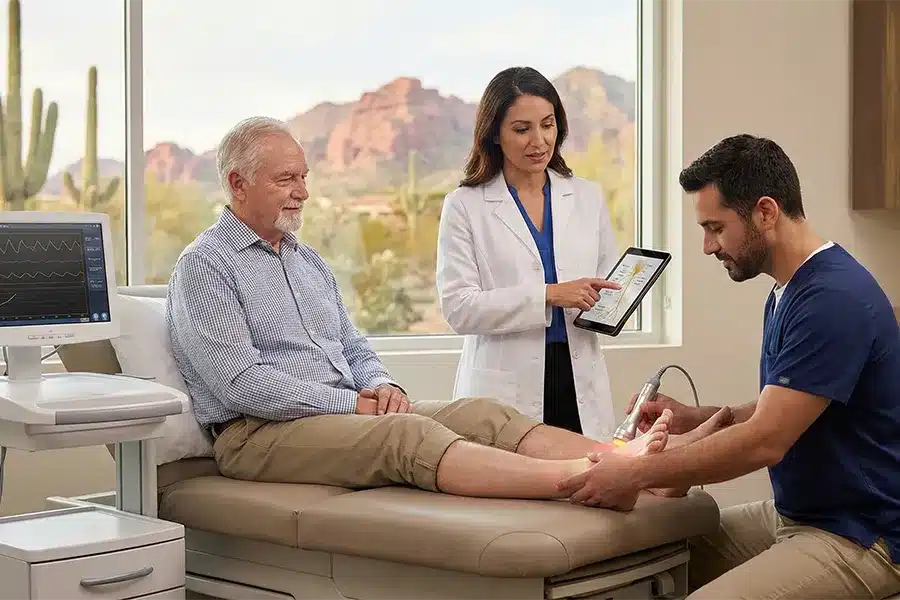
According to the National Institute of Neurological Disorders and Stroke (NINDS), more than 20 million Americans suffer from some form of peripheral neuropathy — and that number likely undercounts the true total because many cases go undiagnosed. A 2024 cross-sectional study published in Current Medical Research and Opinion found that 82.6% of individuals with peripheral neuropathy treatment in the general population had never been formally diagnosed. For residents of Mesa, Gilbert, Queen Creek, and the broader East Valley, nerve pain that causes numbness, burning, tingling, and weakness does not have to mean a lifetime on medication or a path toward surgery. At Arizona Pain and Spine Institute, Dr. Asim Khan and Dr. Daniel Ryklin use a combination of regenerative medicine, targeted nerve pain injections, and interventional procedures to treat peripheral neuropathy at its source. This article explains what the condition is, how the practice approaches it, and what patients can realistically expect.
What Peripheral Neuropathy Is — Through the Lens of Real Clinical Data
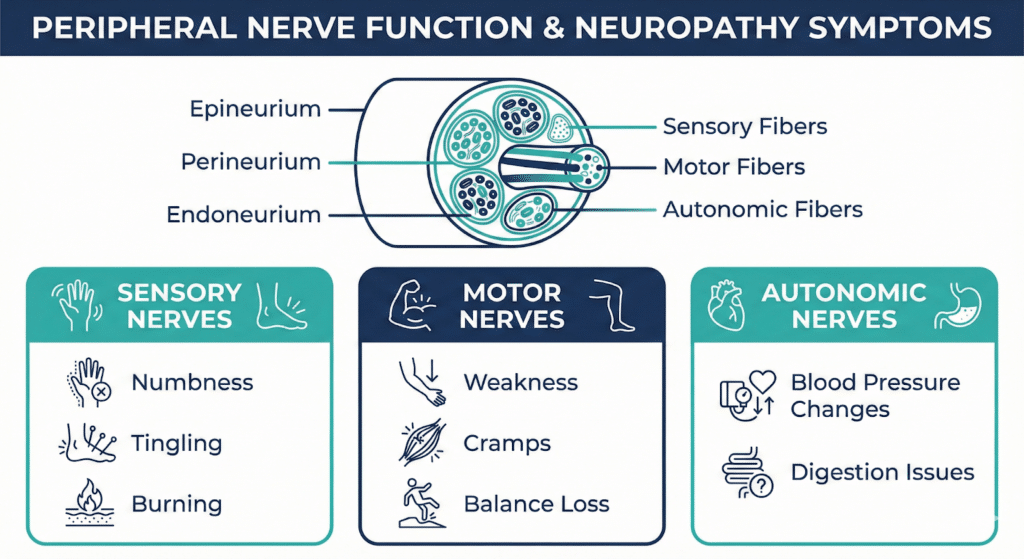
Peripheral neuropathy occurs when nerves outside the brain and spinal cord — the peripheral nerves — become damaged. These nerves carry signals between the central nervous system and the rest of the body, controlling sensation, movement, and automatic functions like heart rate and digestion. When they are damaged, communication breaks down.
According to the StatPearls medical reference maintained by the National Library of Medicine, approximately 2.4% of the general population is affected by peripheral neuropathy, and that prevalence increases to 8% in older populations. The condition is not a single disease but a manifestation of many possible underlying causes. The most common is diabetes — the American Diabetes Association estimates that peripheral neuropathy eventually affects nearly 50% of adults with diabetes during their lifetime, per a 2019 review published in Current Diabetes Reports by researchers at Johns Hopkins.
But diabetes is only one driver. Other documented causes include chemotherapy-induced neuropathy, autoimmune disorders, vitamin deficiencies (particularly B12), chronic alcohol use, infections, and idiopathic cases where no clear cause is identified. A 2024 study in Scientific Reports examining 225 diabetes patients found that peripheral neuropathy significantly reduced quality of life across every measured dimension, including physical function, emotional health, and daily activity.
For patients in the East Valley, the practical impact is clear: peripheral neuropathy can make walking painful, disrupt sleep, increase fall risk, and progressively worsen without treatment. The Foundation for Peripheral Neuropathy reports that patients with polyneuropathy are four times more likely to undergo amputations, and notes that the condition would rank between the 8th and 9th leading cause of years lived with disability if measured using standard global health metrics.
Get Back Your Normal Life Again
As pain specialists, we can guarantee that we are more than qualified in alleviating your pain and treating your condition.
How Arizona Pain and Spine Institute Approaches Neuropathy Treatment

Arizona Pain and Spine Institute treats neuropathic pain as a dedicated condition category, listed alongside lower back pain, knee pain, sciatica, and other core focus areas. What distinguishes the practice’s approach — according to its published treatment information — is the combination of regenerative medicine with targeted interventional procedures.
The Diagnostic Process
The practice emphasizes comprehensive initial evaluations. According to Dr. Ryklin, as quoted on the practice’s website, “Our initial evaluations typically last 60 minutes or more. We need to understand not just where you hurt, but how your pain affects your life and what specific activities you want to return to.”
For peripheral neuropathy specifically, this evaluation process is critical because the treatment must address the underlying cause — not just mask the symptoms. A patient with diabetic neuropathy requires a different intervention pathway than a patient with chemotherapy-induced nerve damage or idiopathic small fiber neuropathy.
Regenerative Medicine for Nerve Pain
Arizona Pain and Spine Institute positions regenerative medicine treatments as a core differentiator, with a particular focus on amniotic tissue biotechnology. The practice describes itself as “worldwide innovators in amnio technology” and uses amniotic stem cell therapy as a central treatment modality.
The scientific basis for applying regenerative approaches to nerve damage is supported by a growing body of preclinical research. A 2025 review published in Frontiers in Cell and Developmental Biology examined the role of mesenchymal stem cells (MSCs) in treating neuropathic pain and found that amniotic fluid-derived MSCs can promote axon regeneration and improve nerve function. The researchers documented that MSC transplantation led to significant improvements in neural behavior, electrophysiological function, and myelination in animal models.
Separately, a 2021 systematic review published in PubMed specifically examining amniotic stem cell-conditioned media for nerve and muscle pathology noted that amniotic-derived stem cells demonstrate significant regenerative potential through their paracrine activity — meaning they release growth factors and cytokines that create a favorable environment for tissue repair, rather than necessarily replacing damaged cells directly.
While these studies are largely preclinical (conducted in animal models and laboratory settings), they establish the biological rationale for the regenerative approach that Arizona Pain and Spine Institute applies clinically. The practice’s published materials state that their stem cell therapy “works by injecting these cells directly into the area with pain” and that “the treatment usually only takes 5 to 15 minutes and doesn’t have a long recovery period.”
Targeted Nerve Pain Injections
Beyond regenerative medicine, Arizona Pain and Spine Institute offers several interventional procedures specifically relevant to neuropathy patients. These include nerve pain injections, which deliver medication directly to affected nerve areas, and nerve blocks, which interrupt pain signal transmission.
The practice also performs radiofrequency ablation (RFA), which uses heat generated by radio waves to target specific nerves and reduce pain signals. According to the American Society of Anesthesiologists, radiofrequency ablation can provide pain relief lasting up to one year by short-circuiting pain signal transmission — a particularly relevant option for neuropathy patients dealing with chronic, treatment-resistant nerve pain.
The Multimodal Approach
Dr. Khan has emphasized the importance of not relying on a single treatment method. As quoted on the practice’s website, “A doctor who only offers one type of treatment — whether that’s medications, injections, or even regenerative therapy alone — is like a carpenter with just one tool.” This multimodal philosophy means that a neuropathy patient at Arizona Pain and Spine Institute may receive a treatment plan combining regenerative medicine, targeted injections, and complementary approaches based on their specific condition and response.
What Patients Can Realistically Expect
Based on the practice’s published information and the broader clinical evidence base, here is what peripheral neuropathy patients should understand about the treatment process and outcomes:
- Consultation Timeline: Arizona Pain and Spine Institute offers a FastTrack cash-pay program that provides expedited appointment access — within days rather than weeks or months — bypassing insurance authorization delays. This is particularly relevant for neuropathy patients, as the StatPearls reference notes that peripheral neuropathies “must be addressed before they result in complications, such as falls with subsequent hip fractures or pedal infections necessitating amputation.”
- Treatment Duration: The practice states that regenerative medicine injections typically take 5 to 15 minutes to administer. However, the full treatment plan — including evaluation, potential imaging, and follow-up visits — unfolds over a longer timeline. Many patients begin feeling significant improvements within weeks of the procedure, according to the practice’s published materials.
- Realistic Outcome Expectations: Peripheral neuropathy treatment outcomes vary significantly based on the underlying cause, severity, and how long the condition has been present. Neuropathy caused by a treatable underlying condition (such as a vitamin deficiency) may show substantial improvement. Diabetic neuropathy management, by contrast, often focuses on slowing progression and reducing symptoms rather than full reversal. The Johns Hopkins review in Current Diabetes Reports emphasizes that “modifiable cardiovascular risk factors, including elevated triglyceride levels, body mass index, smoking, and hypertension” are linked to diabetic neuropathy progression — meaning lifestyle factors remain an important part of any treatment plan.
- What Treatment Does NOT Involve: The practice’s approach is explicitly non-surgical and focused on minimizing reliance on opioid medications. The practice has published multiple articles on non-opioid pain management approaches and positions its treatments as alternatives to both surgery and long-term pharmaceutical dependence.
Why Early Treatment Matters — The Evidence
One of the most important messages in the clinical literature on peripheral neuropathy is the value of early intervention. The StatPearls medical reference states clearly that peripheral neuropathies “must be addressed before they result in complications.” The Foundation for Peripheral Neuropathy reinforces this point, noting that untreated neuropathy leads to a cascade of worsening outcomes: decreased sensation leads to injuries that go unnoticed, which leads to infections, which can lead to amputations.
A 2021 study from the ARIC (Atherosclerosis Risk in Communities) study published in Diabetes Care found that among adults aged 70 and older, the prevalence of peripheral neuropathy reached 39.2% — and that neuropathy was present regardless of diabetes status, affecting 60.2% of participants without diabetes in the oldest age cohorts. This suggests that aging itself is a significant risk factor, and that East Valley residents over 60 should consider screening even in the absence of diabetes.
Arizona Pain and Spine Institute’s locations in Mesa, East Mesa, and Queen Creek serve patients throughout this demographic, and the FastTrack program eliminates the scheduling delays that can turn a treatable condition into a progressive one.
How to Get Started With Neuropathy Treatment at Arizona Pain and Spine Institute
Based on the practice’s published approach to patient care, the pathway for peripheral neuropathy patients follows these steps:
- Schedule a Comprehensive Evaluation: Contact Arizona Pain and Spine Institute at (480) 986-7246 or visit gotpainarizona.com to schedule an initial consultation. The FastTrack program is available for patients who need expedited access.
- Complete a Thorough Assessment: The initial evaluation (typically 60+ minutes) includes a detailed medical history review, physical examination, and discussion of how nerve pain is affecting daily life and specific functional goals.
- Receive a Personalized Treatment Plan: Based on the evaluation, Dr. Khan or Dr. Ryklin develops an individualized plan that may include regenerative medicine, nerve pain injections, radiofrequency ablation, or a combination of modalities.
- Begin Treatment: Many interventional procedures are performed in-office with minimal downtime. Regenerative injections typically take 5–15 minutes.
- Follow Up and Adjust: Post-treatment monitoring allows the team to assess response and modify the plan as needed. Peripheral neuropathy management is often an ongoing process, particularly for conditions like diabetic neuropathy that involve chronic underlying causes.
Conclusion
The 20+ million Americans affected by peripheral neuropathy — including the significant undiagnosed population identified by the 2024 Current Medical Research and Opinion study — face a condition that progressively diminishes quality of life when left untreated. For residents of Mesa, Gilbert, Queen Creek, Chandler, Scottsdale, and Tempe, Arizona Pain and Spine Institute offers a non-surgical, multimodal approach that combines regenerative medicine with targeted nerve interventions to address neuropathy at its source rather than simply managing symptoms with medication.
The single most important step is not delaying evaluation. Contact Arizona Pain and Spine Institute at (480) 986-7246 or schedule an appointment through gotpainarizona.com to discuss whether regenerative medicine and interventional treatment may be appropriate for your peripheral neuropathy.
Frequently Asked Questions
1. What causes peripheral neuropathy?
The most common cause is diabetes, which accounts for approximately 40% of cases according to the Foundation for Peripheral Neuropathy. Other causes include chemotherapy, autoimmune disorders, vitamin B12 deficiency, and idiopathic (unknown) origins. Arizona Pain and Spine Institute evaluates each patient individually.
2. Can peripheral neuropathy be treated without surgery in Mesa, AZ?
Yes. Arizona Pain and Spine Institute offers non-surgical treatments including regenerative medicine using amniotic tissue technology, nerve pain injections, and radiofrequency ablation. These outpatient procedures typically take 5–15 minutes with minimal downtime.
3. How quickly can I get an appointment for neuropathy treatment?
Arizona Pain and Spine Institute’s FastTrack cash-pay program offers appointments within days rather than weeks. Standard insurance-based scheduling is also available. Call (480) 986-7246 for current availability.
4. Does regenerative medicine actually help nerve damage?
A 2025 review in Frontiers in Cell and Developmental Biology found that amniotic-derived mesenchymal stem cells promote axon regeneration and improve nerve function in preclinical models. Arizona Pain and Spine Institute applies this research through their amniotic tissue biotechnology treatments.
5. Is peripheral neuropathy treatment covered by insurance?
Coverage varies by plan and specific diagnosis. Arizona Pain and Spine Institute accepts multiple insurance plans and also offers the FastTrack cash-pay program for patients who want to bypass insurance delays. Contact the practice for specific coverage questions.
Disclaimer: This article references publicly available information from Arizona Pain and Spine Institute (gotpainarizona.com), the National Institute of Neurological Disorders and Stroke (NINDS), the National Library of Medicine (StatPearls), Current Medical Research and Opinion (2024), Frontiers in Cell and Developmental Biology (2025), Current Diabetes Reports (2019), Scientific Reports (2024), the American Diabetes Association, the Foundation for Peripheral Neuropathy, and the American Society of Anesthesiologists, including official documentation, fact sheets, and published clinical studies dated 2019–2025. All metrics and study findings are from documented, peer-reviewed sources. Results described are specific to the study populations and clinical settings mentioned and may vary based on individual patient circumstances, diagnosis severity, neuropathy type, and treatment adherence. Regenerative medicine applications for peripheral neuropathy are supported by preclinical research; individual clinical outcomes vary. For current information about treatments offered at Arizona Pain and Spine Institute, consult gotpainarizona.com or call (480) 986-7246.