 Get an appointment within days, not weeks or months
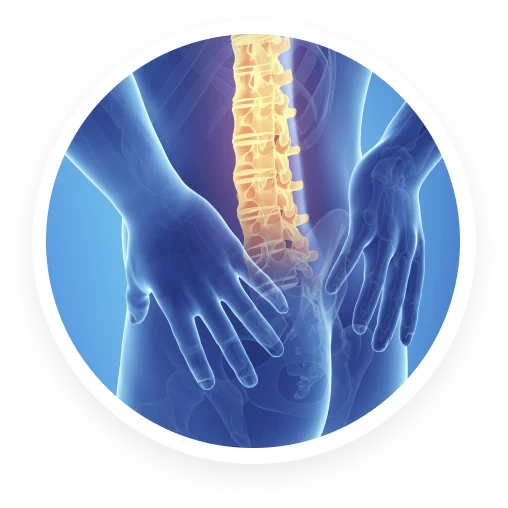
Lumbar Sympathetic Block
This medical procedure is an injection that desensitizes branches of nerves in the lower back.

Allen Finney


Review
Young ladies behind the counter were nice and professional. Dr. Khan was and is awesome. You felt he really cared which I have not felt in the 2 years I've been injured. Only reason I did not give it 5 stars was the hard time I had finding it.

charles griffin

Review
Have been doing a wonderful job with help with my nerve pain, listen to me, and my request no to be put on pain killers but to help find the problem, always return calls so glad is was referred to them.

Stacey Mejia
Review
Awesome staff Dr. Kahn is a really good Doctor he listens and is a helping man!! I appreciate all of your guys work you do for your patients!! You even call to give reminder the day before your appointment! Again that's so awesome!!

Forrest Hammer
Review
NOTHING BUT THE BEST. ABLE TO WALK. ABLE TO PERFORM TASKS THAT I COULDN'T FOR A LONG TIME, LIKE DAILY WALKING, BENDING OVER, CARRYING GROCERIES AND ENJOYING A MOVIE AT THE CINEMA. THANK YOU DR. ASIM KAHN.

Jeanne Neathery
Review
Dr RYklin is amazing. He treats each patient as if you’re his only one. I’ve been seeing him for 7yrs due to a neck injury. He definitely finds what pain management meets your individual needs. The practitioners are amazing as well!!!!

Marty Klopper
Review
Pain Dr office. Staff is friendly and professional. Lots of paper work to be filled out. Office was clean and neat. Masks on Staff at all times and required for patients to enter. Will be going back for follow-up appointments.

What is a lumbar sympathetic block?
It aids physicians to search and address a list of issues in line with these nerves. Normally, a number of injections are required to address these issues.
Sympathetic nerves traverse both sides of the spinal cord. These nerves are related to a long range of functionalities that you don’t deliberately control. These functions consist of circulation, digestion, and sweating.
How is a lumbar sympathetic block administered?
1. Preparation
The patient lies down on their stomach (or on the side) while getting ready for the procedure. A medication to relax your nerve is given while the skin and tissue of the back are desensitized using a local anesthetic.
2. Inserting the Needle
The doctor pushes a needle and meticulously leads it toward the sympathetic nerves. This is made possible by the use of an X-ray device called a “fluoroscope”. The fluoroscope reveals a video image of the needle’s location. The use of a contrast dye increases the accuracy of locating and validating the location of the needle.
3. Injecting the Medication
Following the careful validation of the needle's exact position, the doctor positions a steroid-anesthetic medication. This prescription bathes the inflamed nerve roots
which will help ease the pain being experienced by the patient. This procedure also manages and reduces the pain and inflammation of the nerves. Other benefits can be derived from this procedure depending on your condition.
4. End of Procedure
After the procedure, the needle is withdrawn and the entry point in the skin is cleaned and bandaged. Post-procedure monitoring will be done within a few hours before you are sent home. Most patients after the procedure experience leg numbness and frailty. This is a normal occurrence and can be felt for a few hours. There is also a possibility that you might need additional injections in the future.

Why choose AZ Pain and Spine Institute for your treatment?
We are a team of pain management doctors and specialists. Our physicians have double board certification in their chosen fields and have undergone additional fellowships in pain management. Our professionals have also received advanced medical training in minimally invasive spinal procedures and pain management, including Lumbar Sympathetic Block.